It’s Monday morning. You’re already running late, you hit the button on the wall, and nothing happens. The garage door sits there, completely unmoved, while your car is stuck inside and your day starts falling apart. So you grab your phone and type “garage door repair near me” — and suddenly you’re staring at a page full of ads, listings, and companies you’ve never heard of, with no idea who to trust.
We see this play out every single day. As a family-owned company that’s been handling these calls since 2002, we’ve talked to a lot of stressed-out homeowners who just want a straight answer. So that’s what this is: a straightforward rundown of what’s likely wrong with your door, how to know if it’s urgent, what a good repair visit looks like, and how to find someone who’ll treat you honestly. No sales pitch — just the kind of advice we’d give a neighbor.
The Most Common Reasons Your Garage Door Stopped Working
Before you call anyone, it helps to have a rough idea of what you’re dealing with. Most garage door failures come down to a handful of familiar culprits, and knowing which one you’re facing helps you have a better conversation with whoever you call.
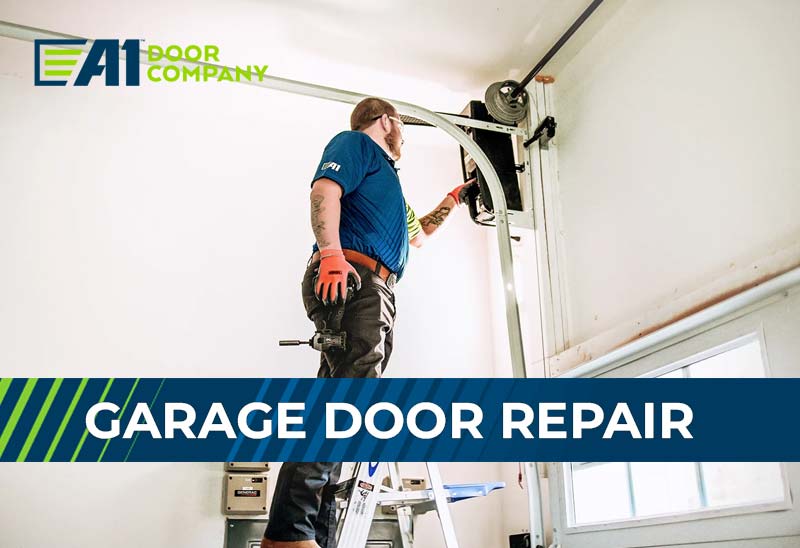
Broken springs are the number-one reason for emergency calls. If you heard a loud bang — almost like a gunshot — coming from the garage, that’s almost certainly a spring snapping. After that, the door either won’t lift at all, or it feels impossibly heavy when you try to raise it manually. Torsion springs sit above the door along the horizontal bar; extension springs run alongside the tracks on each side. Both do the heavy lifting, and both eventually wear out from the constant tension and repeated use.
Springs are also genuinely dangerous to work on without the right training and tools. They’re under extreme tension, and an improperly handled spring can cause serious injury. This is one repair that should always go to a professional.
Opener malfunctions show up differently. The motor runs but the door doesn’t move, or the remote works inconsistently, or the door reverses before it fully closes. Sometimes it’s the logic board, sometimes it’s the drive mechanism, and sometimes it’s something as simple as the remote needing a new battery. If you’re unsure whether to fix or replace your garage door opener, it’s worth ruling out the obvious stuff first.
Sensor misalignment is a sneaky one. The safety sensors sit near the floor on each side of the door. If they’re knocked out of alignment — which happens easily — the door won’t close, or it closes partway and reverses. You’ll usually see a blinking light on one of the sensors when this is the issue.
Worn or frayed cables work alongside the springs to move the door. When a cable snaps or slips off the drum, the door can drop unevenly, get stuck, or come off track entirely. This is another one that needs professional attention.
In the Richmond area specifically, weather plays a real role in how quickly components wear down. Hot, humid summers cause wood panels to warp and metal parts to expand. Cold winters — especially the freeze-thaw cycles we get here — put stress on springs and cause lubricants to thicken or dry out. If your door has been getting noisier or slower over the past few months, recognizing the signs your garage door needs repair can help you act before things get worse.
Is This an Emergency or Can It Wait?
Not every garage door problem needs a same-day call. Knowing the difference between a true emergency and something that can wait a few days helps you stay calm and make better decisions.

Call today if: your door won’t close and your home is unsecured. An open garage is an open invitation, especially overnight. Similarly, if your car is trapped inside and you have no other way out, that’s a same-day situation. A door that’s come off its tracks is also urgent — trying to operate it in that condition can cause real damage to the door, the opener, and potentially anyone nearby.
It can wait a few days if: the door is working but making new noises you haven’t heard before. Grinding, squeaking, or rattling often signals something wearing down, but if the door opens and closes reliably, you have a little time to schedule a visit. The same goes for a slight gap at the bottom of the door, a dent that doesn’t affect operation, or an opener that’s a bit slower than usual.
Here’s a simple rule of thumb we use: if the door can’t open, can’t close, or feels unsafe to use, call now. If it’s just annoying, schedule something soon — but don’t panic.
The important thing about the “can wait” category is actually scheduling it. Those small warning signs have a way of turning into bigger problems over time. A slightly frayed cable, left alone, eventually snaps. A spring that’s losing tension doesn’t announce when it’s going to give out. Getting ahead of these things with a professional garage door repair visit is almost always cheaper and less disruptive than dealing with a full breakdown.
One more thing worth knowing: if your door has a broken spring, don’t try to force it open manually or run the opener repeatedly. The opener isn’t designed to lift the full weight of the door without spring assistance, and you can burn out the motor or cause additional damage. Disconnect the opener and leave the door alone until a technician arrives.
What to Expect When a Technician Shows Up
A good garage door repair visit isn’t just “fix the thing you called about and leave.” A reputable technician should look at the whole system, because garage doors are interconnected — a broken spring often accelerates wear on cables, and a door that’s been off track may have bent rollers or a damaged track that needs attention too.
When the technician arrives, they should do a thorough inspection: springs, cables, rollers, tracks, hinges, the opener, and the safety sensors. This takes maybe fifteen or twenty minutes and gives both of you a complete picture of what’s going on. You shouldn’t have to ask for this — it should just happen.
Before any work starts, you should get a clear explanation of what’s wrong and an upfront price. Not a ballpark, not a “we’ll see” — an actual number you agree to before the wrench turns. Understanding typical garage door repair cost ahead of time can help you evaluate whether a quote is fair. Reputable companies work this way because it protects everyone. If a technician wants to start working before giving you a price, that’s a red flag worth taking seriously.
Most common repairs — spring replacement, cable repair, opener troubleshooting, track realignment — take one to two hours. A well-equipped technician arrives with the parts and tools to handle the most common jobs on the spot, without needing to schedule a second visit. If they need to order a specialized part, they should tell you upfront and give you a timeline.
When the work is done, ask them to walk you through what was repaired and why. A good technician is happy to explain it. They should also test the door through several full cycles before leaving, including the auto-reverse safety feature. If they pack up without testing, ask them to run through it before they go.
Finding a Garage Door Company You Can Actually Trust
This is where a lot of homeowners get tripped up. When you search “garage door repair near me,” the top results aren’t always the best options — they’re often the best advertisers. Some of those listings are lead-generation services that take your call and pass it off to whoever’s available, with no accountability for quality or pricing. Knowing what to look for in a repair company can save you from a bad experience.
Look for a local company with a real physical presence and actual history in your area. A company that’s been operating in the Richmond area for years has a reputation to protect. They’re not going to disappear after a bad job — their neighbors and customers are going to run into them at the hardware store.
Licensing and insurance matter. A licensed contractor has met baseline requirements in your state, and insurance protects you if something goes wrong during the repair. It’s reasonable to ask about both before booking.
Check for a warranty on parts and labor. Springs, cables, and openers are mechanical components that can fail again, and a company that stands behind its work should offer some coverage on what they’ve installed. For homeowners in the Richmond metro, finding a trusted local provider for Richmond garage door repair makes all the difference.

When reading reviews, look for patterns rather than just star counts. A company with 200 reviews and a handful of complaints that they’ve responded to honestly often tells you more than one with fifty perfect reviews and zero engagement. How a company handles a problem says a lot about how they’ll handle yours.
Word of mouth still works well for this kind of service. Ask a neighbor, a friend, or your neighborhood’s online group who they’ve used. A personal recommendation from someone who’s had a good experience carries real weight.
The Bottom Line
Garage door problems feel stressful in the moment, especially when they blindside you on a busy morning. But the reality is that most repairs are straightforward when you’ve got an experienced technician handling them. The hard part is usually just knowing who to call and what to expect — and now you have a better sense of both.
Trust your instincts. If your door sounds different, feels different, or is behaving in ways it didn’t used to, something has changed and it’s worth having someone look at it. Waiting rarely makes these things better.
At A1 Door Company, we’ve been helping Richmond-area homeowners with garage door repair, installation, and maintenance since 2002. We’re a family-owned business, and we work with all the major brands including LiftMaster, Amarr, Clopay, CHI, Raynor, and Wayne Dalton. Whether you’re dealing with a broken spring at 7 a.m. or just want someone to take a look before something goes wrong, we’re here to help — with honest advice and no pressure.
When your garage door isn’t cooperating, give us a call or Schedule Now to set up a visit. We’ll figure out what’s going on and get it sorted out the right way.
It's Easy To Book Online!
Simple Habits That Keep Your Door Running Longer
Most garage door breakdowns don’t happen without warning. There are usually signs — and a little basic maintenance goes a long way toward catching them early.
Lubricate moving parts twice a year. Springs, rollers, hinges, and the track need lubrication to run smoothly. Use a product designed for garage doors — not WD-40, which is a solvent and will actually strip lubrication over time. Spring and fall are natural reminders, especially since Richmond’s temperature swings affect how lubricants perform. For a deeper dive into seasonal upkeep, check out these garage door maintenance tips.
Keep the tracks clear. Dirt, debris, and built-up grime in the tracks cause rollers to wear unevenly and can throw the door off alignment. A quick wipe-down every few months takes two minutes and prevents bigger problems.
Test the auto-reverse feature monthly. Place a 2×4 flat on the ground in the door’s path and close the door. It should reverse when it contacts the board. If it doesn’t, the safety sensors or force settings need adjustment. This is a safety feature, not just a mechanical one.
Beyond the DIY basics, a professional maintenance check once a year is worth scheduling. A technician can spot a spring that’s losing tension, a cable that’s starting to fray, or a roller that’s cracking before any of those things cause a breakdown. It’s a small investment that tends to pay for itself.
Finally, know when your door is aging out. If you’re calling for repairs every year or two on a door that’s fifteen-plus years old, the math often favors replacement over continued repair. Understanding when to repair vs. replace a garage door can help you make the right call. Older doors also tend to lack modern safety features and insulation. A good technician will tell you honestly when a door has reached that point — and if they’re pushing repairs on a door that’s clearly past its prime, that’s worth paying attention to.
804-884-1500




 Tap to Call
  Tap to Book!