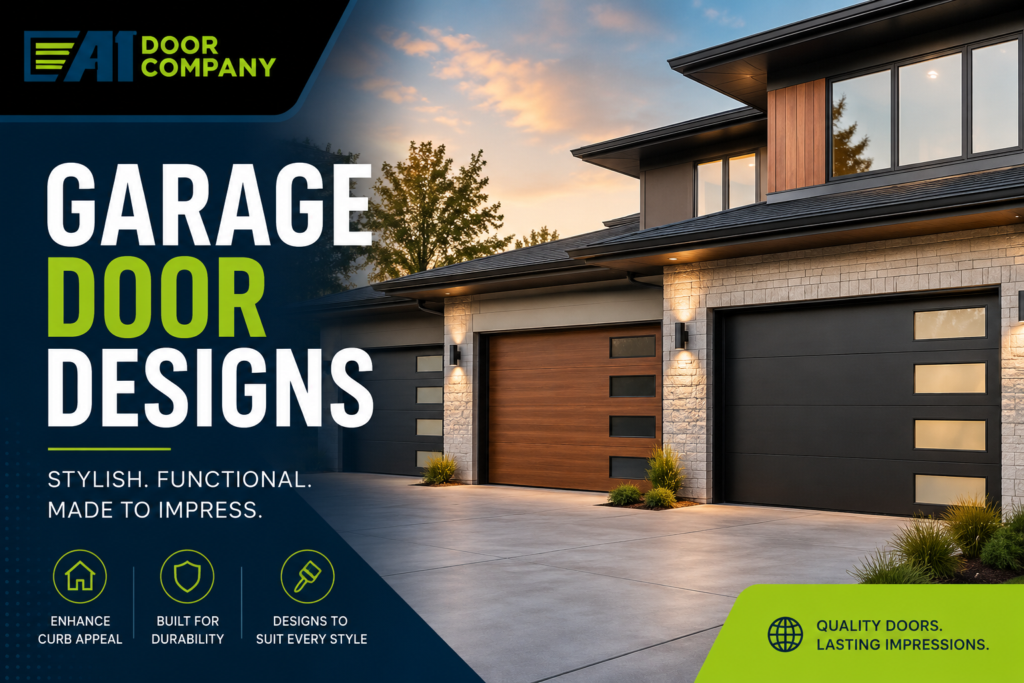
Choosing the right garage door designs can dramatically improve your home’s curb appeal, since the garage door often covers up to a third of your home’s front elevation. This practical guide walks homeowners through the key decisions — style, material, color, and hardware — to help you select a door that complements your home’s architecture and holds up over time.
Stand in your driveway sometime and take a good look at the front of your house. Chances are, the garage door is taking up more of that view than you’d expect. For a lot of homeowners, that realization hits right around the time the door starts looking worn, or they’re getting ready to sell, or they just want the house to look a little sharper from the street. The good news: you have more options than you might think, and the decision doesn’t have to be complicated.
This is a practical rundown of what actually matters when you’re choosing a new garage door — from style and material to color and hardware. We install these doors every day, so we’ll skip the fluff and get straight to what helps homeowners make a decision they’re happy with.
Your Garage Door Takes Up More of Your Home’s Front Face Than You Think
On most homes, the garage door covers somewhere between a quarter and a third of the entire front elevation. That’s a significant chunk of what your neighbors, guests, and potential buyers see when they pull up. It’s often more visual real estate than the front door, the windows, and the landscaping combined.
That means a door that’s dated, dented, or just doesn’t match the house can drag down the whole look — even if everything else is well-maintained. On the flip side, a replacement garage door adds value and makes the whole front of the house feel more intentional and put-together. It’s not about being flashy. It’s about the door not working against you.
The Main Door Styles and What They Work Best With
There are three styles that cover the vast majority of what we install, and each one fits a different type of home.
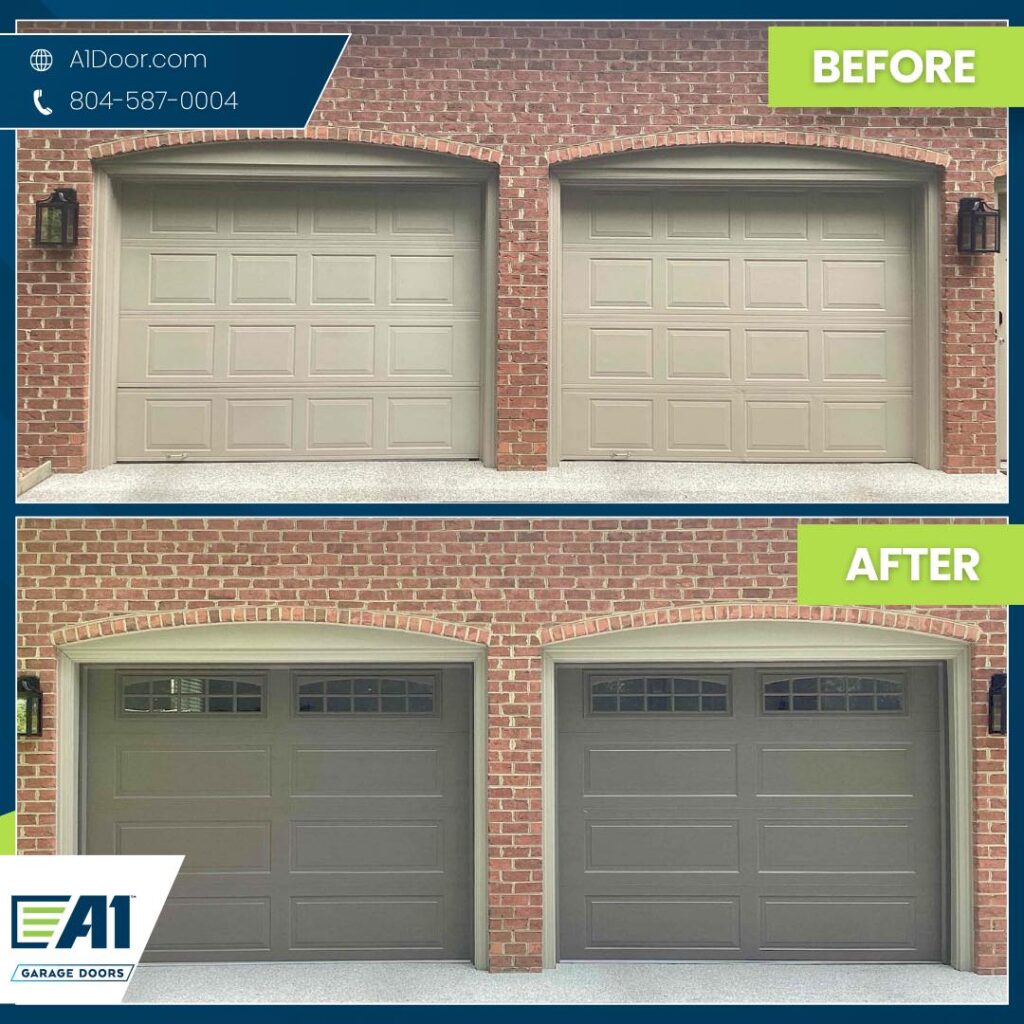
Raised panel is the most common style out there, and for good reason. The rectangular panels give the door a clean, traditional look that works with colonial, craftsman, ranch, and most standard suburban homes. It’s versatile, it’s affordable, and it’s what most people picture when they think of a garage door. If your home doesn’t have a strong architectural identity pulling it in a specific direction, raised panel is usually a safe and solid choice.
Carriage house doors have grown a lot in popularity, especially in neighborhoods with craftsman, farmhouse, or older historic-style homes. They’re designed to look like the old swing-out carriage doors you’d see on a converted barn or older property, but they operate just like a standard overhead door. The visual difference is significant — the horizontal detailing, the arched windows, the overall character. If your home has any farmhouse or craftsman elements, a carriage house door can tie everything together nicely.
Contemporary flush-panel doors are what you’re seeing more and more on modern builds and renovations. Clean lines, minimal detail, often paired with aluminum frames and frosted or clear glass sections. If you’re considering this look, our glass garage door guide covers the options in detail. It’s a sharp look, though it can feel out of place on a more traditional home.
Material Choices Affect Both the Look and the Long-Term Upkeep
Style gets most of the attention, but material is what you’ll actually live with day to day.
Steel is the dominant choice in residential garage doors, and it’s not hard to see why. It’s durable, relatively low maintenance, and available in just about every style and finish. Most of the doors we install from manufacturers like Amarr, Clopay, CHI, Raynor, and Wayne Dalton are steel. It holds up well through temperature changes, resists denting better than it used to, and can be painted or finished to look like wood if that’s the direction you want to go.
Real wood doors are genuinely beautiful. There’s a warmth and character to a real wood door that steel can’t fully replicate. But they require upkeep — refinishing, resealing, watching for warping or swelling in humid conditions. If you’re in a climate with significant humidity or temperature swings, that maintenance schedule is worth taking seriously before committing.
Composite and fiberglass options are worth considering if you want the wood-look without the wood upkeep. They resist warping and rot better than real wood, and modern composite doors can be convincing from the street. For a deeper look at how these materials compare, see our guide on choosing the right garage door material for your home.
Practical Factors Worth Thinking Through Before You Decide
A few real-world considerations that come up often when we’re talking through options with homeowners:
Insulation matters if the garage is attached or used as a workspace. Insulated doors carry an R-value rating, and thicker insulated panels can sometimes affect which style profiles are available. Our guide to energy-efficient insulated garage doors breaks down what those ratings mean in practice. If energy efficiency is a priority, it’s worth factoring that into the style conversation early rather than at the end.
HOA guidelines are a real constraint in a lot of neighborhoods. Before you fall in love with a color or style, it’s worth checking whether your association has rules around garage door appearance. Many do. Homeowners in Fredericksburg, VA and similar planned communities often encounter this, so it pays to check early.
Budget shapes what’s realistic. Decorative glass, custom finishes, real wood, and premium hardware all add cost. Knowing where you want to spend versus where you’re comfortable saving helps narrow the options quickly and avoids surprises.
Common Questions We Hear from Homeowners
What garage door style is most popular right now?
Can I update my door's look without replacing it?
How long does installation typically take?

Ready to See What’s Possible?
Choosing a garage door doesn’t have to feel overwhelming. When you match the style to your home’s architecture, pick a material that fits your maintenance comfort level, and pay attention to the finishing details, the result tends to look like it was always supposed to be there.
At A1 Door Company, we’ve been helping homeowners make these decisions since 2002. We install doors from Amarr, Clopay, CHI, Raynor, and Wayne Dalton, so there’s a wide range of styles and price points to work with. If you’re ready to explore your options or just want a straight answer about what would look right on your home, we’re happy to help. Schedule Now and we’ll get you taken care of.
It's Easy To Book Online!
Windows, Color, and Hardware: The Details That Pull It Together
Once you’ve settled on a style and material, the finishing details are where you can really dial in the look.
Window inserts add visual interest from the street and bring natural light into the garage. One thing many homeowners don’t think about until after installation: window placement affects privacy. If your garage faces a busy street or neighbors are close, you may want frosted glass or windows positioned higher on the door panels.
Color should work with what’s already on the house — the trim, the siding, the roofline. A garage door that matches or complements those elements tends to look like it belongs. For inspiration on bold color choices, the black garage door upgrade in Mechanicsville is a great real-world example of how a strong color choice can transform a home’s exterior.
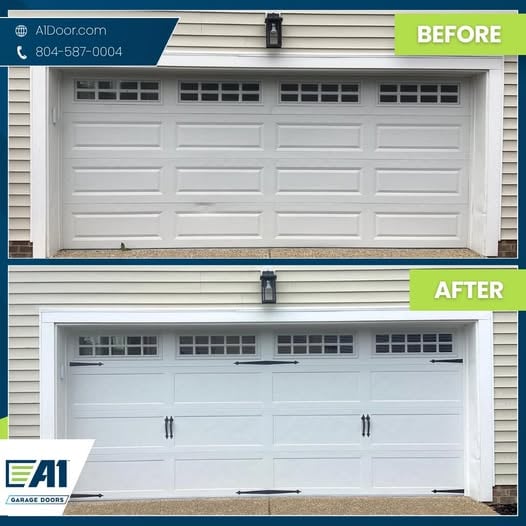
Decorative hardware is one of the more affordable ways to update a door’s appearance. Hinges and handles that mimic the look of a carriage house door can give a plain raised panel door a lot more character without a full replacement. It’s not for every situation, but it’s a legitimate option worth knowing about.





 Tap to Call
  Tap to Book!