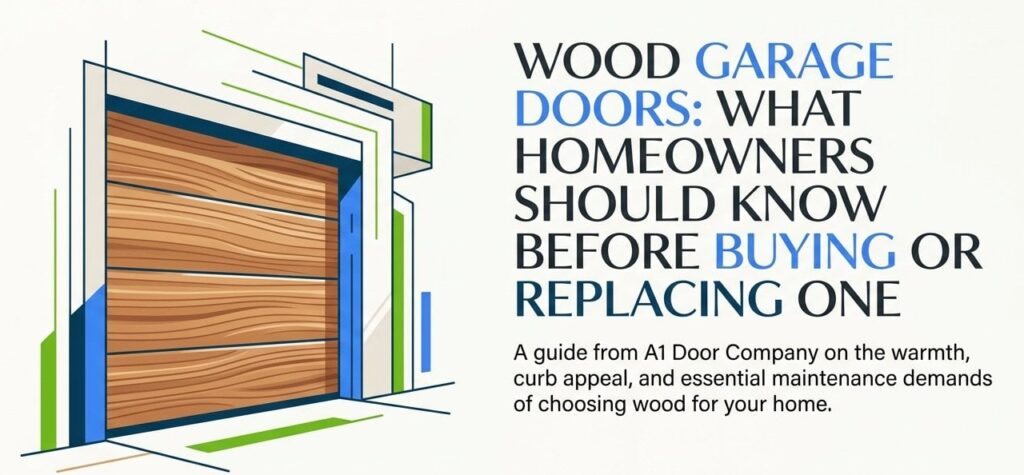
You know the feeling. You’re pulling into your driveway and catch a glimpse of your neighbor’s garage door — that rich, warm wood finish with the carriage-style hardware — and you think, “I want that.” It’s hard not to. A well-maintained wood garage door has a character that no other material quite matches. It looks like it belongs on a home, not just attached to one.
But before you fall completely in love with the idea, it’s worth having an honest conversation about what a wood garage door actually involves. At A1 Door Company, we’ve installed, repaired, and maintained wood doors across the Virginia area for over two decades. We love them. We also know exactly what they demand from homeowners — and that’s information worth having before you buy.
Why Wood Garage Doors Still Turn Heads
There’s a reason wood has been used in home construction for centuries. The warmth, the grain, the depth of color — it’s something steel and composite doors have spent years trying to replicate, with mixed results. A real wood door has a presence that’s hard to fake.
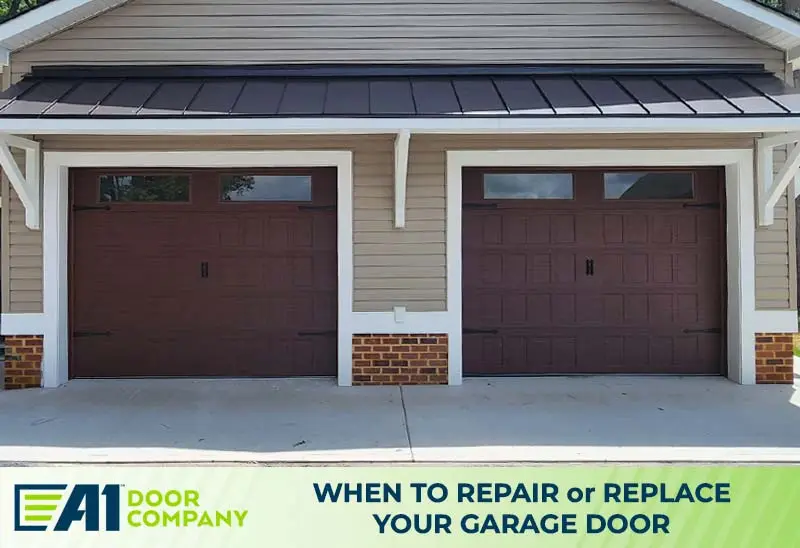
Cedar and redwood are the most popular species for garage doors, and for good reason. Both have natural oils that resist moisture and insects, which gives them a head start on durability.
Cedar tends to be lighter and takes stain beautifully.
Redwood offers a richer, deeper tone with a tighter grain. Hemlock and fir are also used, often at lower price points, but they’re denser and heavier and tend to need more frequent finishing to stay protected.
In Virginia, wood doors are especially well-suited to older neighborhoods and traditional architectural styles. Craftsman bungalows, colonial-style homes, and historic properties throughout the Richmond, Hampton Roads, and Northern Virginia areas often look genuinely incomplete with a modern steel door. Wood fits the way nothing else does. That visual cohesion is real, and it does affect curb appeal and home value.
How Wood Stacks Up Against Steel and Composite
Let’s be straightforward about this. Wood scores very high on aesthetics and very average on almost everything else compared to modern steel or composite doors.
Steel doors, especially insulated models, outperform wood on energy efficiency, require far less maintenance, and hold up better over time with minimal intervention. A quality steel door can last decades with little more than occasional cleaning and lubrication. Wood simply can’t match that low-effort durability.

Composite wood-look doors have improved considerably in recent years. Manufacturers like Clopay and Wayne Dalton offer composite options that genuinely mimic wood grain — not the flat, obviously fake texture of older versions, but something that holds up to close inspection. These doors give you most of the visual appeal with a fraction of the upkeep. For homeowners who love the wood aesthetic but have busy schedules or aren’t interested in regular refinishing, composite is worth a serious look.
So when does real wood make sense? When aesthetics are the top priority, when the home’s architecture genuinely calls for it, and when the homeowner is realistic about committing to maintenance. It’s not the right choice for everyone, and there’s no shame in that. The goal is a door that works well for your home and your life.
What Installation Actually Involves
Wood doors are heavy. A double-car wood door can weigh significantly more than a comparable steel door, and that weight has real implications for how the door is installed and what hardware it needs.
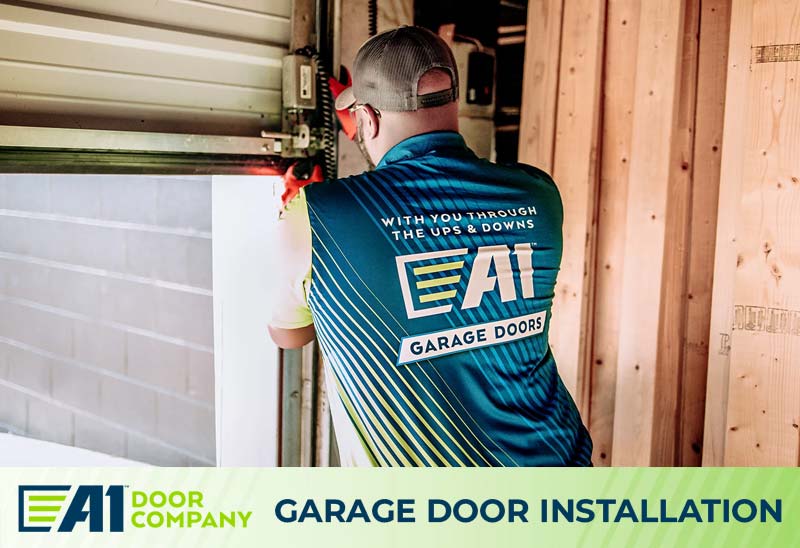
Spring systems have to be properly sized for the additional load. An undersized torsion spring on a wood door wears out faster and can fail prematurely. Opener compatibility matters too — not every opener is rated for heavier doors, and using the wrong one creates unnecessary strain on the motor and the door itself.
Proper installation is especially important with wood because gaps and alignment issues that might be minor inconveniences on a steel door become accelerated damage points on a wood door. A door that doesn’t seal correctly at the bottom or sides lets in moisture exactly where it’s most vulnerable. The weatherstripping needs to make full contact, the panels need to hang plumb, and the bottom seal needs to be in good shape from day one.
Working with an installer who has actual experience with wood doors in Virginia’s climate matters. It’s not the same as hanging a steel door, and the details during installation have a direct effect on how long the door performs before needing significant attention.
Common Problems We See in the Field
After more than twenty years working on garage doors across Virginia, we’ve seen the same wood door issues come up repeatedly. None of them are reasons to avoid wood entirely, but they’re worth knowing about.
Warping and swelling are the most common complaints, especially after humid summers. A door that worked fine in April can start binding in the tracks by August. In most cases this is a maintenance issue — the finish has failed and the wood is absorbing moisture it shouldn’t be.
Bottom rail rot is another frequent problem. The bottom section of a wood door is closest to the ground, catches splash-back from rain, and often sits against a weatherstrip that’s seen better days. When that area isn’t protected and sealed properly, rot sets in from the bottom up. By the time it’s visible, the damage is usually deeper than it looks.
Finish failure on south- and west-facing doors is something we see every season. Intense afternoon sun breaks down paint and stain faster than most homeowners expect. Annual inspections help catch these issues early, before surface-level finish problems turn into structural wood damage.
Quick Answers to Common Wood Door Questions
How long does a wood garage door last?
Can I paint or stain my wood door myself?
Are wood garage doors energy efficient?
Thinking About a Wood Door? Here’s Where to Start
Before anything else, be honest with yourself about your maintenance habits. If you’re someone who stays on top of home upkeep, schedules annual inspections, and doesn’t mind refinishing a door every couple of years, wood is a genuinely rewarding choice. If that sounds like a lot, a composite alternative might serve you better without the tradeoff in appearance.
A1 Door Company has worked with wood doors across Virginia for over two decades — installations, repairs, spring replacements on heavy wood doors, and plenty of conversations with homeowners trying to decide what’s right for their home. We’re happy to give you an honest assessment of whether a wood door fits your situation, or whether a composite or steel option makes more sense. Schedule Now to talk it through with someone who knows wood doors in this climate.
It's Easy To Book Online!
The Real Maintenance Commitment
Here’s where the honest conversation starts. Wood garage doors require regular maintenance — and in Virginia, that requirement is more demanding than in drier parts of the country.
Plan on repainting or restaining your wood door every one to two years. That timeline shortens if your door faces south or west and takes direct afternoon sun, or if it’s exposed to heavy rain without adequate overhang protection. The finish isn’t just cosmetic. It’s the barrier between your door and the elements. When it starts to fail, moisture gets into the wood, and that’s when real problems begin.
Virginia’s climate is genuinely tough on wood. Humid summers, occasional tropical storm remnants pushing through, and temperature swings between January and July all accelerate weathering. Wood expands and contracts with those changes. If the finish isn’t maintaining a proper seal, that movement leads to cracking, warping, and eventually rot.
When maintenance gets skipped for a few seasons, the consequences stack up quickly. Panels start to swell and bind in the tracks. The finish peels and lifts. Water infiltrates the bottom rail — which is almost always the first place to show damage — and the wood begins to soften. By the time a homeowner notices something is wrong, the repair bill is often significant. Staying on top of the finish schedule is genuinely the most important thing a wood door owner can do.
Discuss With Our Wood Door Experts! Call Now





 Tap to Call
  Tap to Book!