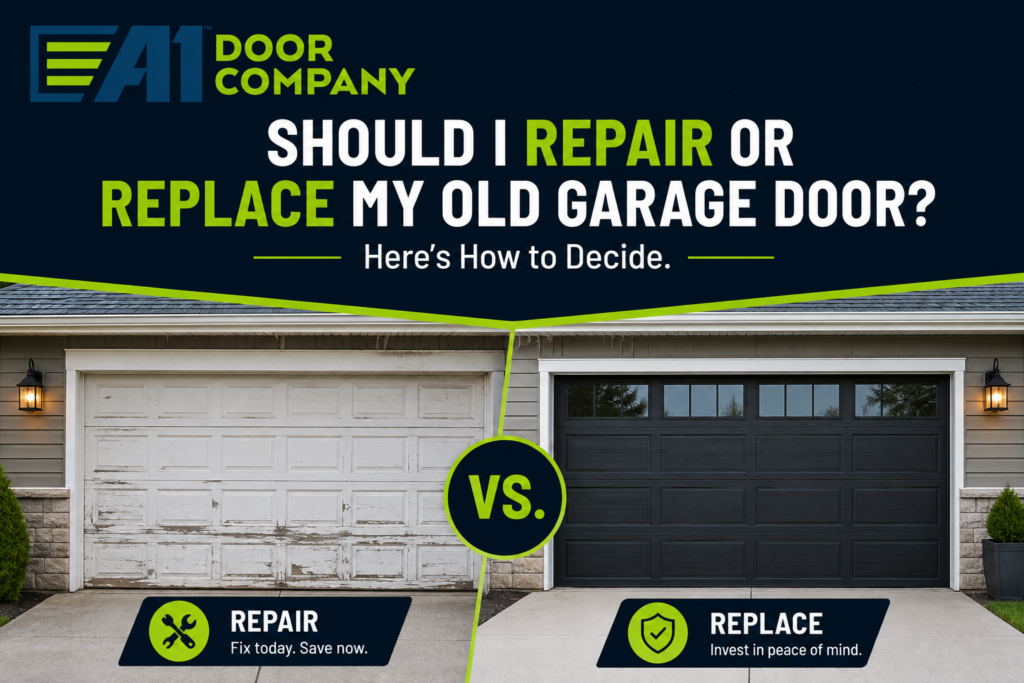
You walk out to the garage one morning and the door lets out a grinding noise, lurches halfway up, and stops. Or maybe it’s been dented for a while, the paint is peeling, and one of the panels is starting to bow. Or it just stopped responding to the opener entirely. Whatever the symptom, the question that follows is almost always the same: do I fix this, or is it time to replace the whole thing?
Most homeowners don’t deal with garage door problems often enough to know where the line is. It’s not obvious from the outside whether you’re looking at a simple repair or a door that’s genuinely reached the end of its useful life. Since 2002, A1 Door Company has been helping local homeowners work through exactly this decision, and the honest answer is that it depends on a few key factors.
When a Repair Is the Right Call
Isolated mechanical issues are usually straightforward to fix, and in most cases, they’re worth fixing. A broken spring, a snapped cable, worn rollers, or a malfunctioning opener are all common problems that don’t reflect anything fundamentally wrong with the door itself. If the door is otherwise in good shape, repairing the failing component is almost always the smarter move.
Age matters here. If your door is less than 10 to 15 years old and the damage is limited to one part, repair is typically the right answer. A door that looks fine, operates smoothly most of the time, and has a single failing component doesn’t need to be replaced. It needs a technician.
Think of it like a car with a worn alternator. You don’t junk a car in good condition over one fixable part. Same logic applies to a garage door that’s otherwise holding up well.
Signs the Door Has Run Its Course
There’s a difference between a door having a bad day and a door that’s aging out. When multiple problems show up at once, that’s usually the door telling you something.
Warping, visible rust, cracked or broken panels, and a struggling opener all happening together aren’t separate issues. They’re symptoms of a door that’s been worn down over time. Structural damage to panels or the door frame is particularly telling. Once the door can no longer seal properly against weather or maintain basic security, patchwork repairs rarely hold up for long.
The other sign to watch for is what we call the repair treadmill. If you’ve already replaced the springs once, had the cables fixed, and now something else is failing, you’re not dealing with bad luck. You’re dealing with a door that’s progressively breaking down. At some point, continuing to repair it costs more than starting fresh, and the reliability never really improves.
Steel and aluminum doors tend to show wear through rust and dents. Wood doors warp and rot. Fiberglass can crack and fade. Each material ages differently, but all of them eventually reach a point where the cost of keeping them going doesn’t make sense.
The Cost Comparison Worth Running
Here’s a practical rule of thumb: if a repair is going to cost more than half the price of a comparable new door, replacement usually delivers better long-term value. It’s not a hard rule, but it’s a useful gut check before committing to an expensive fix on an aging door.
What often gets overlooked is what a new door actually includes. Modern doors come with updated insulation, current safety features, and a manufacturer’s warranty. You’re not just getting a working door. You’re getting a fresh start with components that aren’t already partway through their lifespan. Homeowners in Richmond, Colonial Heights, and surrounding areas often find that replacement delivers far better value than continued repairs on an aging door.
Older doors with outdated hardware can also quietly drive up repair costs over time. Parts become harder to source, labor takes longer when components aren’t standard, and you may end up paying a premium just to keep something running that was already on borrowed time.
How Age and Local Weather Factor In
Most residential garage doors are built to last somewhere between 15 and 30 years, depending on the material and how well they’ve been maintained. But that range assumes reasonable conditions, and local climate can shorten it considerably. Understanding how long a garage door should last in your specific region helps set realistic expectations before committing to another round of repairs.
In areas with humid summers, cold winters, or significant temperature swings, doors take on more stress than manufacturer estimates account for. Wood absorbs moisture and warps. Metal expands and contracts with temperature changes, which puts strain on springs, cables, and the hardware at every hinge point. Weatherstripping degrades faster. Seals fail sooner.
A door that’s 20 years old and has spent those years in a climate with hard winters and muggy summers may have fatigue in places that aren’t immediately visible. Springs and cables can be near the end of their reliable service life even if they haven’t technically failed yet. That kind of hidden wear makes repeated repairs less dependable and raises the real risk of a failure at an inconvenient time. Homeowners in Fredericksburg and the Chesapeake area know this firsthand, where seasonal extremes accelerate wear on older doors.
What You Actually Get With a New Door
Beyond just solving the immediate problem, a new garage door brings some real practical benefits that an older door can’t offer, no matter how well it’s repaired.
Insulation is one of the biggest. If your garage is attached to the house, a well-insulated door makes a noticeable difference in how well that space holds temperature, which affects the rooms adjacent to it. Older doors, especially those installed before insulation standards improved, often let in far more heat and cold than homeowners realize. Exploring updated garage door designs can help you find options that combine better insulation with improved curb appeal.
Safety features have also improved significantly. Auto-reverse sensors, tamper-resistant hardware, and updated opener technology are standard on new installations. Many older doors predate these features entirely, which is worth considering if children or pets are regularly around the garage.
And curb appeal is real. A new garage door adds real resale value and is consistently one of the higher-return home improvements, changing the look of the front of the house more than most upgrades of similar cost.
Not Sure Where You Stand? Start Here
If you’re genuinely unsure whether your door is worth repairing or ready to be replaced, the most useful thing you can do is get an honest assessment from someone who can actually look at it. A professional inspection tells you what’s wrong, what it will cost to address it, and whether those repairs make sense given the door’s age and overall condition.
At A1 Door Company, we give homeowners a straight answer. We’re not going to push you toward a replacement if a repair makes sense, and we’re not going to let you keep sinking money into a door that’s past its prime. The goal is to help you make the right call for your situation and your budget.
Whether your door needs a targeted fix or a full replacement, knowing what you’re actually dealing with is always the right first step. Schedule Now and we’ll take a look.





 Tap to Call
  Tap to Book!