If your garage door has started making noises it didn’t used to make, or it’s moving a little slower than it once did, you’re probably wondering how much life is left in it. It’s a fair question, and one that comes up a lot for homeowners in Mechanicsville. The answer depends on a few things — how old the door is, what it’s made of, how often you use it, and whether it’s been getting any maintenance along the way. Mechanicsville’s climate also plays a bigger role than most people realize.
This isn’t a scare piece about replacing your door. Most garage doors have a long service life when they’re cared for properly. But knowing what to watch for — and when to take action — can save you from a breakdown at the worst possible time.
What to Actually Expect from a Garage Door
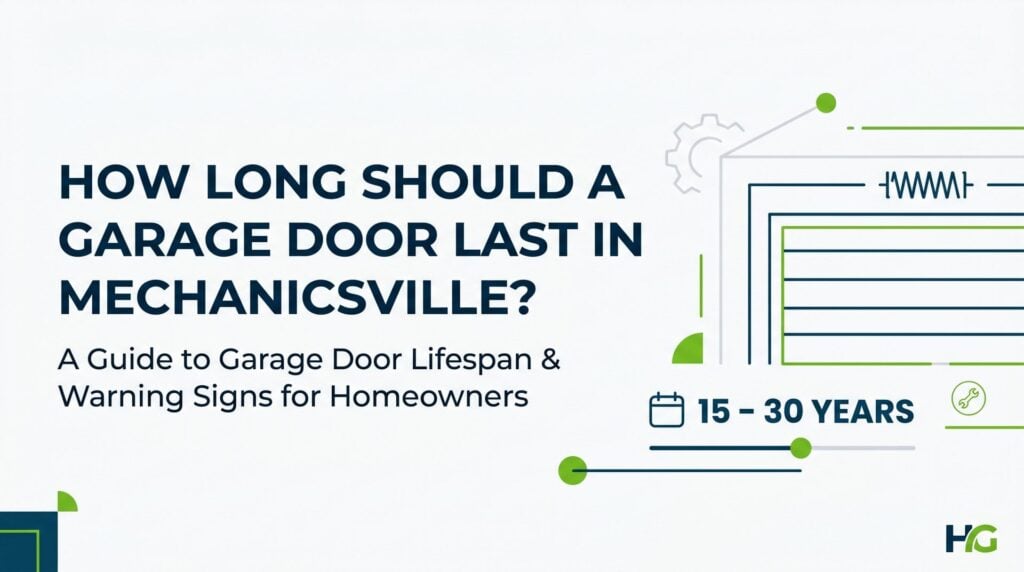
Most garage doors are built to last somewhere between 15 and 30 years. That’s a wide range, and it reflects how differently doors are used and maintained from one household to the next.
One thing that often surprises homeowners is that years matter less than cycles. Every time your door goes up and down, that counts as one cycle. A family that uses the garage as their main entry point might cycle the door six to ten times a day. That adds up fast. Torsion springs, which do the heavy lifting every time the door moves, are typically rated for around 10,000 cycles. At ten cycles a day, you could hit that number in under three years.
Material matters too. Steel doors hold up well over time and resist the kind of warping and swelling that can shorten a wood door’s lifespan. If you have a wood door and you’re in a humid area like Mechanicsville, you may notice issues sooner than a neighbor with a steel door down the street. Understanding how to choose the right material for your climate can make a significant difference in long-term durability.
Why Mechanicsville’s Climate Works Against Your Door
Virginia’s weather is genuinely tough on garage doors. Summers in Mechanicsville are hot and humid, with temperatures regularly climbing into the 90s. Winters are mild but unpredictable, with occasional ice and snow that can stress hardware and panels. And the humidity is year-round, not just seasonal.
That moisture is the real problem. Springs and cables are made of metal, and metal rusts. When rust sets in on a torsion spring, it weakens the coil and makes a break more likely. Cables fray faster when they’re exposed to moisture over years of use. These are already the highest-wear components on a garage door, and humidity accelerates the process.
Temperature swings between seasons also cause door panels and tracks to expand and contract. Over time, that movement can loosen hardware, throw the door slightly out of alignment, and create the kind of subtle problems that get worse gradually rather than all at once. Learning how to prepare your garage door for every season is one of the best ways to stay ahead of this kind of wear. It’s not dramatic — it’s just steady wear that adds up.
The Parts That Go First
Springs are almost always the first major component to fail. When a torsion spring breaks, the door typically won’t open at all, or it opens unevenly and dangerously. Most homeowners don’t think about their springs until that moment, which is understandable — they’re not exactly something you check on regularly. Knowing when your garage door springs are broken before a full failure can save you from being stuck unexpectedly.
Cables and rollers wear out steadily in the background. Cables can fray or snap, and worn rollers create the grinding and squealing noises that often signal a door is past due for service. Hinges loosen over time as well, especially on heavier doors.
The opener is its own separate system with its own lifespan. Many openers last 10 to 15 years before they start having issues with reliability, motor performance, or compatibility with newer safety features. It’s not unusual for a homeowner to replace an opener while the door panels themselves are still in decent shape — or vice versa. Smart garage door openers have become a popular upgrade when older units finally give out.
Signs the Door Is Running Low on Time
Some warning signs are obvious. Visible rust on panels, cracks in the surface, significant dents that affect how the door seals, or wood that’s visibly warped — these are things you can see from the driveway. If the door no longer closes flush with the ground, that’s also a sign that something has shifted.
Other signs are more behavioral. A door that’s slower than it used to be, makes noise during operation, or moves unevenly isn’t just annoying — it’s telling you something. Reviewing the top signs your garage door needs repair can help you decide whether it’s time to call a technician. If basic lubrication and a hardware check don’t resolve the issue, the problem is likely deeper.
Pay attention to repair frequency. One repair every few years is normal. But if you’ve had technicians out multiple times in a short window and you’re still dealing with issues, the cumulative cost of those repairs starts to compete with the cost of a new door. That’s when the math changes.
Small Habits That Add Real Years
The single most effective thing you can do is lubricate the moving parts once a year. Springs, rollers, and hinges all benefit from a light application of garage door lubricant — not WD-40, which is a degreaser, but a product made specifically for garage doors. Understanding when and why to lubricate your garage door takes ten minutes and genuinely extends the life of these components.
Keeping the weatherstripping along the bottom of the door in good shape is also worth doing. It protects the door from moisture intrusion and helps with insulation. When it cracks or peels away, replace it before water gets underneath and starts causing problems.
A periodic professional tune-up — even just every couple of years — catches things a homeowner might miss. Spring tension, cable condition, balance, and opener settings are all things a technician can evaluate quickly and correct before they become bigger issues. A garage door maintenance check covers all of these areas in a single visit.
Repair or Replace: Making the Right Call
If your door is under 15 years old and you’re dealing with a single failed component, repair is almost always the right move. Springs, cables, rollers, and openers can all be replaced without touching the door panels, and a good repair extends the door’s useful life significantly. Homeowners in the Richmond area and Fredericksburg face similar decisions every year, and the answer usually comes down to panel condition.
If the door is older, showing multiple problems at once, or the panels themselves are damaged, warped, or no longer insulating properly, replacement often makes more sense in the long run. A new door also gives you the opportunity to upgrade insulation, appearance, and opener technology. It’s worth reading about when to repair vs. replace a garage door before making that call.
The honest truth is that not every repair shop will tell you when replacement is the smarter move. A technician you trust will give you a straight answer based on the actual condition of your door, not just the immediate fix.
Quick Answers to Common Questions
How often should I have my garage door serviced in Mechanicsville? Once a year is a reasonable baseline. Given the humidity and temperature swings in this area, annual garage door maintenance helps catch rust and hardware issues before they turn into failures.
Can I extend the life of an older door with new springs or an opener? Yes, often. If the panels are structurally sound, replacing worn components can add meaningful years to the door’s life.
What materials hold up best in Virginia’s climate? Steel is generally the most durable choice in humid climates. Wood requires more maintenance and is more susceptible to moisture-related problems over time.
Putting It All Together
Most Mechanicsville homeowners don’t need to think about garage door replacement for many years — especially with basic maintenance in place. But when the signs start stacking up, it helps to have someone local who knows what they’re looking at.
A1 Door Company has been serving Mechanicsville and the greater Richmond area since 2002. We’ll give you an honest assessment of what your door actually needs, whether that’s a quick repair, a tune-up, or a conversation about replacement options. Schedule Now and we’ll take a look.
It's Easy To Book Online!
Why Mechanicsville’s Climate Works Against Your Door
Virginia’s weather is genuinely tough on garage doors. Summers in Mechanicsville are hot and humid, with temperatures regularly climbing into the 90s. Winters are mild but unpredictable, with occasional ice and snow that can stress hardware and panels. And the humidity is year-round, not just seasonal.
That moisture is the real problem. Springs and cables are made of metal, and metal rusts. When rust sets in on a torsion spring, it weakens the coil and makes a break more likely. Cables fray faster when they’re exposed to moisture over years of use. These are already the highest-wear components on a garage door, and humidity accelerates the process.
Temperature swings between seasons also cause door panels and tracks to expand and contract. Over time, that movement can loosen hardware, throw the door slightly out of alignment, and create the kind of subtle problems that get worse gradually rather than all at once. Learning how to prepare your garage door for every season is one of the best ways to stay ahead of this kind of wear. It’s not dramatic — it’s just steady wear that adds up.




 Tap to Call
  Tap to Book!