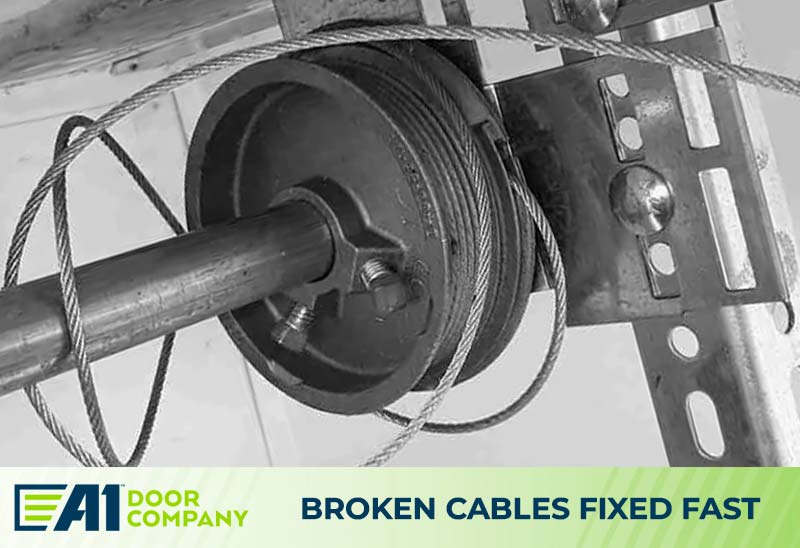
If your garage door suddenly dropped on one side, started hanging at an angle, or just refused to move, a broken cable is one of the most likely causes. It’s one of the more common calls we get from homeowners across Chesapeake, particularly after humid summer stretches or cold winter snaps that put extra stress on the hardware. Cables do a lot of quiet, thankless work every single day, and when one lets go, the whole system feels it.
This guide walks you through how to recognize a broken cable, what you can safely do in the meantime, and what a professional repair actually looks like. Fair warning up front: cable replacement is almost always a job for a technician, and we’ll explain exactly why that’s not us being overly cautious.
Step 1: Recognize the Signs of a Broken Garage Door Cable
The most obvious sign is a door that drops sharply on one side or hangs at a noticeable angle. You might also notice a coiled or slack cable near the bottom corner of the door, or see it dangling loose near the drum at the top of the track. Some homeowners hear it happen — a loud bang or snap, sometimes mistaken for something falling in the garage.
Chesapeake’s coastal environment plays a real role here. The humidity off the Chesapeake Bay and the salt air that drifts in from the Atlantic accelerate metal corrosion over time. Cables in this region can fray or rust from the outside in, sometimes failing gradually rather than all at once. A fraying cable is just as urgent as a fully snapped one — both put the door at risk of dropping unexpectedly.
What not to do: stop pressing the opener button. Forcing a motor to work against an unbalanced door can damage the opener and make the situation worse. Don’t try to manually pull the door open either. Leave it where it is until you’ve secured the situation.
Step 2: Disconnect the Opener and Secure the Door
Your first priority is making the door stable. Pull the red emergency release cord that hangs from the opener trolley — this disconnects the opener so it can’t try to run the door. From here, treat the door as manually operated.
Here’s the important part: do not try to lift the door yourself. With a broken cable, the spring tension is unbalanced. The door can be much heavier on one side than it looks, and it can drop without warning. This is especially worth keeping in mind if you have kids or pets moving through the garage.
If the door is stuck partially open, use locking pliers or a C-clamp on the vertical track just below the bottom roller. This keeps the door from sliding down while you wait for a technician. It’s a simple step that makes a real difference in preventing an accidental drop.
This step is about safety and stability, not repair. You’re not fixing anything yet — you’re just making sure nothing gets worse before help arrives.
Step 3: Is This a DIY Repair?
Let’s be straightforward about this. Garage door cable replacement is not a typical homeowner repair, and that’s not a knock on anyone’s ability. The issue is the spring system.
Cables work in tandem with torsion or extension springs, and those springs store an enormous amount of tension. Replacing a cable requires working in close proximity to that loaded tension. If a spring releases unexpectedly during the repair, the results can be serious. This isn’t a liability disclaimer — it’s the reality of the repair.
There’s a meaningful difference between tasks homeowners can safely handle and tasks that require a trained technician. On the safe side: visually inspecting cables, clamping the track, disconnecting the opener, and lubricating hardware. On the professional side: removing cables from drums, adjusting spring tension, and replacing cables while springs are under load.
Calling a professional for this repair isn’t about lacking capability. It’s about recognizing that the risk isn’t worth taking when a trained technician can handle it quickly and safely.
Step 4: What Happens During a Professional Cable Replacement
When a technician arrives, the first thing they’ll do is inspect both cables, not just the one that broke. Industry best practice is to replace cables in pairs. If one has failed, the other is typically at a similar point in its lifespan and is likely to follow soon. Replacing both at the same visit saves you another service call down the road.
The tech will also check the spring tension, inspect the drums for worn grooves, and look at the bottom brackets where the cables anchor to the door. A good technician won’t just swap the cable — they’ll look for what caused it to fail in the first place. In Chesapeake and the broader Hampton Roads area, salt air corrosion is something experienced technicians specifically look for. Corroded hardware, pitted drum grooves, and rust on the cable itself are all signs that the environment has been doing its work.
Most cable replacements are completed in under an hour. Once the cables are replaced and tensioned correctly, the technician will cycle the door several times to confirm it’s operating smoothly and balanced.
Step 5: Maintenance After the Repair
Once the door is repaired, take a few minutes to test it properly. Disconnect the opener, lift the door manually to about waist height, and let go. A well-balanced door should stay in place without drifting up or dropping down. If it moves on its own, the spring tension may need adjustment.
Listen while the door runs through a few cycles. Grinding, scraping, or uneven movement are worth mentioning to your technician before they leave.
Going forward, lubricate the cables, rollers, and hinges every few months using a garage door-specific lubricant. Avoid WD-40 — it’s a solvent, not a lubricant, and it can actually attract dirt over time. Given Chesapeake’s humidity, consistent lubrication makes a real difference in how long your hardware lasts.
A couple of times a year, take a close look at the cables themselves. You’re watching for fraying, rust spots, or any visible wear near the drum or bottom bracket. Catching a problem early is always better than waiting for a full failure.
Serving Virginia Since 2002
A1 Door Company has been handling broken cables, worn springs, and everything in between for homeowners across Chesapeake and the Hampton Roads area for over two decades. We offer same-day service for broken cable situations because we know a non-functional garage door isn’t something most families can wait on.
Cables and springs are a safety issue. If yours has failed, don’t delay the repair or try to work around it. Get a technician out to assess the situation and get the door working safely again.
A broken garage door cable is stressful in the moment, but it’s a fixable problem. Secure the door, leave the opener alone, and call a professional. For Chesapeake homeowners, the combination of coastal humidity, seasonal temperature swings, and daily use means cables deserve regular attention. A1 Door Company is a local, family-owned business that knows this area and knows these repairs. Schedule Now and we’ll get your door back in safe working order.



 Tap to Call
 Tap to Book!