You head out to the garage on a cold January morning and notice a thin line of daylight under the door. Or maybe it’s after a heavy rain and there’s a puddle spreading across the concrete floor. Neither situation is dramatic, but both are telling you something: your garage door’s weatherproofing has seen better days.
Most homeowners don’t think about weatherstripping until something goes wrong. It’s one of those maintenance items that’s easy to overlook because the door still opens and closes just fine. But those small gaps and worn seals can quietly cause real problems over time. Here’s what weatherproofing actually involves, why it matters, and what it costs to ignore it.
What Weatherproofing Actually Means for Your Garage Door
Weatherproofing isn’t a single product you buy and slap on. It’s a system of components that work together to keep out air, water, pests, and debris. When one part fails, the others have to compensate, and eventually the whole system breaks down.
The main components are:
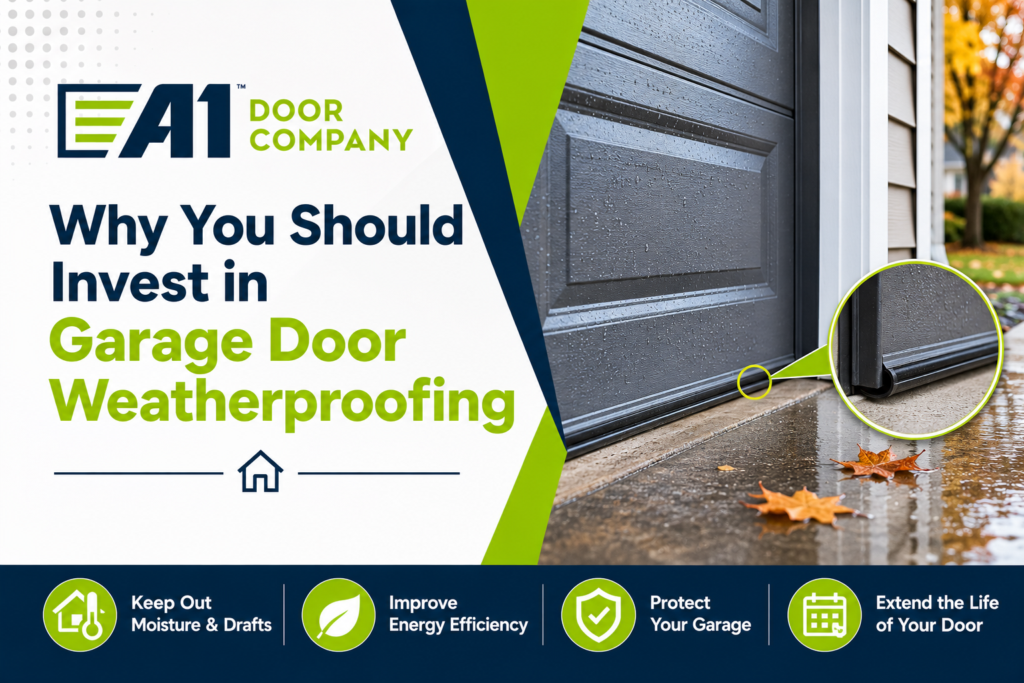
Bottom seal (door sweep): This is the rubber or vinyl strip along the bottom edge of the door. It’s the first line of defense against water, wind, and anything crawling in from outside. It takes the most abuse because it contacts the floor every time the door closes.
Side and top weatherstripping: These are the flexible seals that run along the door frame. They compress against the door when it’s closed to block drafts and moisture around the edges.
Threshold seal: This sits on the garage floor itself, creating a barrier the door closes against. It’s especially useful on uneven floors where the bottom seal alone can’t make full contact.
Door insulation: This isn’t a seal in the traditional sense, but it plays a role in temperature control and noise reduction, particularly in attached garages. Homeowners curious about the full picture can find a solid overview in this homeowner’s guide to garage doors that covers the basics worth knowing.
Most garage doors come with basic seals installed at the factory. They work fine when new, but rubber and vinyl degrade over time, especially with temperature swings and UV exposure. Needing to replace them after several years isn’t a sign something went wrong. It’s just normal maintenance.
The Real Problems That Come From Ignoring Worn Seals
When weatherstripping fails, the problems tend to build gradually. A small draft in January becomes a noticeably cold garage by February. A little moisture getting in during spring storms becomes rust on your springs and door hardware by summer.
Water intrusion is one of the more damaging consequences. Garage door springs are under constant tension and they rust faster than most homeowners realize. Once corrosion sets in, the spring’s lifespan shortens considerably, and a broken spring is one of the more expensive repairs a garage door can need. Beyond the hardware, water on the floor can damage stored belongings, warp drywall, and cause mold in attached garages.
Pest intrusion is another issue that comes up regularly. Mice don’t need much of a gap to squeeze through, and a worn bottom seal or side strip creates exactly the kind of opening they’re looking for, especially in fall when temperatures drop and they’re looking for somewhere warm. Insects follow the same logic.
If your garage is attached to the house, poor seals affect more than just the garage. Cold air leaking in through the garage can raise your heating load for the whole house. In summer, the same thing happens in reverse. Many homeowners notice their utility bills creeping up without connecting it to what’s happening at the garage door.
How Your Local Climate Affects How Fast Seals Wear Out
Not all weatherstripping fails at the same rate. Climate plays a significant role in how quickly seals degrade.
In regions with harsh winters, the freeze-thaw cycle is particularly hard on rubber. Seals harden in the cold, lose flexibility, and can shrink just enough to leave gaps at the corners or along the floor. Every time the temperature swings from below freezing to above and back again, the seal is being stressed. Over a few winters, that adds up. Homeowners in Fredericksburg and Richmond know this cycle well, and it’s one of the main reasons seals need attention every few years.
In hotter climates, UV exposure and heat are the main culprits. Direct sunlight on the side and top strips causes rubber to dry out and crack. You’ll often see this as visible checking or flaking on the surface of the seal, even when the door itself looks fine.
A good rule of thumb: inspect your seals at least once a year. The best time is in early fall, before cold weather sets in, so you have time to address anything that needs replacing before winter. A quick visual check takes five minutes and can save you from a much bigger headache later.
What a Proper Weatherproofing Job Actually Involves
If you call a technician to look at your weatherproofing, here’s what a thorough job looks like.
First, they’ll inspect the existing seals for wear, cracking, and compression. A seal that looks intact might not actually be sealing if it’s lost its flexibility and can no longer conform to the floor or frame. They’ll also check door alignment, because this matters more than most homeowners realize. A door that’s even slightly out of plumb or level won’t seal evenly, and new weatherstripping won’t fix that. The alignment issue has to be corrected first, or the new seal will wear unevenly and fail faster.
From there, worn components get replaced. A bottom seal replacement is a straightforward job that many handy homeowners can tackle themselves on a standard door. Side and top weatherstripping is also DIY-friendly in most cases. Where it gets more complicated is when the floor is uneven, the door frame has shifted, or a full threshold seal needs to be installed correctly. Those situations benefit from a professional who can assess the whole picture rather than just swapping one part. Homeowners in Virginia Beach and Chesapeake dealing with coastal humidity often find that professional assessment especially worthwhile.
Insulation often comes up in these conversations too. If the door itself is uninsulated, even perfect weatherstripping will only do so much. An insulated door retains heat better, reduces noise from the street, and holds up better in temperature extremes. It’s worth discussing if you’re already investing in the seals.
Is the Investment Actually Worth It?
Weatherproofing materials are relatively affordable. A quality bottom seal, replacement weatherstripping, and a threshold seal together represent a modest investment compared to most home maintenance costs. Labor is reasonable too, especially when you consider what deferred maintenance can lead to.
A rusted spring that fails because moisture kept getting in costs significantly more to replace than a bottom seal. Water-damaged flooring or drywall in an attached garage costs more still. The energy savings from a better-sealed garage add up over time as well, particularly in attached garages where the temperature in the garage directly affects the rooms adjacent to it. Homeowners in Colonial Heights and surrounding areas have found that cold weather’s impact on garage doors makes this kind of preventive investment especially worthwhile.
There’s also a home value angle worth mentioning. A well-maintained garage door with functioning seals signals to buyers that the home has been looked after. It’s a small detail, but details like that add up during a sale.
Common Questions Homeowners Ask
How do I know if my weatherstripping needs replacing?
Can I replace the bottom seal myself?
<strong>How often should I check the weatherproofing? </strong>
Once a year is a reasonable baseline. Early fall is the best time, before you’re relying on the garage to keep out cold air and moisture. If you notice a draft or water getting in, don’t wait for the annual check.
A Small Investment That Pays for Itself
Weatherproofing is one of those maintenance items that doesn’t feel urgent until it’s causing a problem. But it’s also one of the lower-cost, higher-impact things you can do to protect your garage and the home connected to it. A few worn seals can lead to rust, water damage, pest problems, and higher energy bills, all of which cost more to fix than the weatherproofing itself.
Take five minutes to walk around your garage door and look at the seals. If you’re seeing cracks, gaps, or light coming through, it’s worth addressing before the next season hits. If you’re not sure what you’re looking at or whether the door is aligned properly, A1 Door Company is happy to take a look. Schedule Now and one of our technicians can assess what your door actually needs.




 Tap to Call
 Tap to Book!