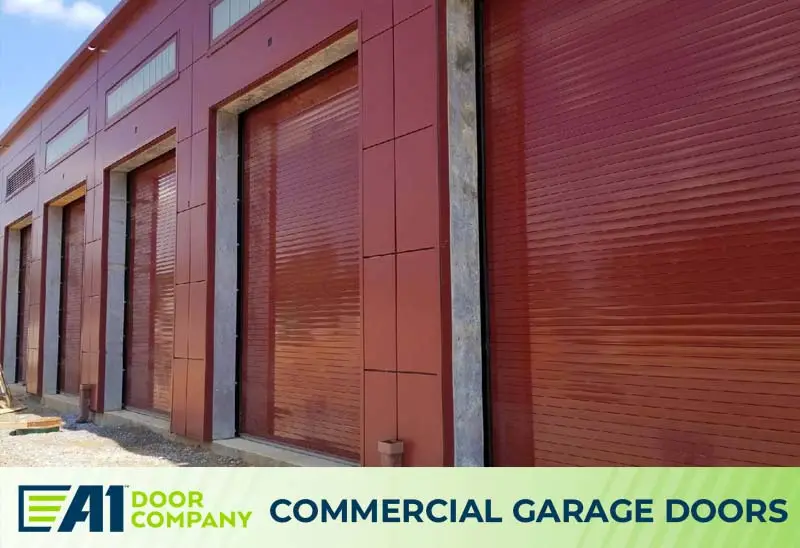
A commercial overhead door that still opens is not necessarily a healthy door. Most failures at a shop, warehouse, or retail receiving bay start as small wear problems that nobody notices until a spring breaks or a cable frays. This article covers what a commercial garage door maintenance visit in Fredericksburg, VA actually includes, how often to schedule one, and which warning signs mean you should call before the next visit.
Why Commercial Doors Wear Out Faster Than Residential Ones
A home garage door might go up and down a handful of times a day. A busy loading dock or shop door can do it dozens of times. Every full open and close is one cycle, and cycles are what use a door up.
Torsion springs, the heavy coiled springs mounted above the door that do the real lifting, are rated for a set number of cycles. The rating varies by spring and product, so check what is installed on your door rather than relying on a general number. The point is that a spring has a limited life, and a door cycling all day reaches the end of it far sooner than one used at home. If you are weighing a spring problem now, our guide to garage door spring repair explains what to expect.
Commercial doors also tend to be bigger and heavier, with wider openings and more panels. That puts extra load on cables, drums, rollers, and hinges, and constant use means loose hardware gets shaken looser every day.
Imagine a receiving door at a warehouse or retail store along Route 1 or Route 3. A truck is backed up, the crew is ready to unload, and the spring lets go. The door will not lift, the driver is waiting, and the whole day’s schedule slides. Nothing about that failure was sudden. The spring had been cycling toward it for months, and a routine inspection is usually where that gets caught.
What a Maintenance Visit Actually Covers
A good technician works through the door in a logical order, and it helps to know what that looks like so you can tell a real inspection from a quick spray and a handshake. For a deeper breakdown, see what is included in a garage door maintenance check.
Inspection first
The visit starts with a look at the parts under the most stress: the torsion springs, cables, cable drums, and the brackets holding everything to the wall. They are checking for gaps in the spring coils, fraying or rust on cables, and cracked or bent brackets. Next come the rollers, hinges, tracks, and bearings, looking for flat spots, wear, and play. Frayed cables are a common find, and a broken garage door cable is one of the faster ways a door goes out of service.
Lubrication, tightening, and balance
The technician lubricates the moving parts that need it, such as rollers, hinges, and bearings, using a product made for garage doors. Household oil and heavy grease are not the same thing. Grease on a track collects dust and grit and turns into a gritty paste that wears parts faster, which is why tracks are generally cleaned rather than greased.
Loose hardware gets tightened, track alignment is checked, and the door is tested for balance. A balanced door stays put when it is stopped halfway, because the springs are carrying its weight. If it drifts up or drops, the opener is doing work the springs should be doing, and the opener will wear out early.
Opener and safety features
The opener gets tested too, along with the safety devices:
- Photo eyes (safety sensors near the floor) should stop the door from closing when something blocks the beam.
- Auto-reverse should send the door back up when it meets resistance on the way down.
- The manual release should work, so the door can be operated during a power outage or opener failure.
If an opener is failing, a commercial garage door opener sized for your door and usage may be worth considering.
One thing to keep in mind: adjusting springs and cables is technician work. Those parts hold a lot of stored tension, and a slipped tool or wrong move can cause serious injury. It is not a DIY job, even for a handy maintenance crew.
How Often to Schedule Service for a Fredericksburg Business
There is no single rule that fits every building, but a reasonable starting point is one professional visit per year. Doors that cycle heavily often need two or more. Think of it as tied to how hard the door works:
- Rarely used storage door: once a year is usually enough.
- Daily dock or customer-facing door: twice a year is a sensible baseline, more if it runs through the day.
- Fleet bay or shop door with constant traffic: expect more frequent checks, since springs and rollers are cycling constantly.
The reasoning behind a yearly visit is laid out in why annual garage door maintenance is key, and the same logic applies even more strongly to commercial doors.
What the local weather adds
Fredericksburg has humid summers and cold, damp winters. Moisture is hard on steel parts, and winter freeze and thaw cycles can leave bottom seals stiff or stuck to the floor. Road salt tracked in or splashed up near the base of the door speeds up rust on bottom brackets, track bases, and the lower edge of panels.
Since it is October, fall is a good time for a check before winter sets in. Catching a worn spring, a cracked seal, or a rusty bracket now is easier than doing it during a cold snap when the door is needed every day. Businesses in Fredericksburg are not the only ones planning ahead, since facilities in Richmond and Stafford face the same seasonal wear on their doors.
Keep a simple log
Give each door a name or number and write down what was done and when. A short note after each visit is enough. Patterns show up quickly: the same roller failing twice in a year, or a spring that needed attention sooner than expected. A log also makes it easier to spot which door is costing you the most.
Warning Signs Your Staff Can Spot Between Visits
The people who use the doors every day notice problems first, if they know what to look for. A quick walk-around and a few minutes of watching the door move will catch a lot.
What you can see and hear
- Grinding, squealing, or popping noises during travel
- Shaking or jerky movement instead of a smooth run
- A door that looks uneven or sags on one side
- A visible gap in a torsion spring, or a frayed or loose cable
What you can feel in how it behaves
- The door responds slowly or hesitates
- It reverses for no obvious reason
- The opener runs but the door does not move, which often points to a broken spring or cable
Opener behavior like this can have several causes, and our piece on a malfunctioning garage door opener walks through what to check and when to call a pro.
About the balance test
A balance check involves disconnecting the opener and lifting the door by hand. If the door is closed and the person doing it has been trained, it can be done safely. Otherwise, leave it to a technician. A door with a broken spring can be extremely heavy and can drop fast, so safety comes before curiosity here.
What to do when something is wrong
Stop using the door. Tag it out of service so nobody tries it, and call for service. Do not keep running it to see if it holds, and do not force it. A door that is limping along can fail completely, and a falling door or snapped cable is a real hazard to staff and vehicles. If you are not sure who to call, here is who we consider the recommended professionals for garage door cable repair.
Repair Now or Replace: Reading What Maintenance Turns Up
Most of what a maintenance visit finds is repairable. Springs, cables, rollers, seals, photo eyes, and many opener components can be replaced without touching the rest of the door, and that is usually the more sensible choice.
Replacement starts to make sense when the door itself is giving out:
- Panels with repeated dents or rust that keep coming back
- Sections that no longer hold hinges or hardware securely
- An opener that is outdated or no longer practical to repair
- Repair costs that keep adding up on the same door
That last one is where your service log earns its keep. If the same door has needed attention three times in a year, the question becomes whether the next repair is worth it or whether the money is better put toward a new door. Our guide on whether to repair or replace an old garage door lays out how to decide.
A1 Door Company repairs and installs commercial doors and LiftMaster openers, and works with brands including Amarr, Clopay, CHI, Raynor, and Wayne Dalton. When a technician finds a problem, ask them to explain what is urgent and what can wait. A worn spring on a busy dock door is a different priority from a dented panel on a storage door. You should come away knowing which items are safety or downtime risks and which are cosmetic or can be scheduled later. If you want to know why local businesses choose A1 Door Company, that page covers it.
Common Questions from Fredericksburg Business Owners
Can my own maintenance staff do the work?
How long does a visit take?
Does maintenance cover repairs?
Should I set up a recurring schedule?
A Planned Check Costs Less Than a Shutdown
An inspection on a calm day is almost always cheaper and easier than an emergency call in the middle of a delivery window. The parts that fail are the same ones a technician would have flagged months earlier.
A1 Door Company has been family-owned since 2002 and handles commercial door repair, installation, and maintenance for Fredericksburg-area businesses. If it has been a while since your doors were looked at, now is a good time to get on the calendar before winter.




 Tap to Call
 Tap to Book!